
Trends of malaria incidence, prevalence, mortality, and disability‑adjusted life years in Eastern Africa region from 1990 to 2021: a systematic analysis from Global Burden of Disease 2021 study
EpiGen PhD student Taye Abuhay Zewale is the corresponding author of this paper on malaria:
Background. Malaria has long been a global health priority, particularly in Eastern Africa, where it remains the leading cause of child mortality and a significant barrier to socioeconomic development. Despite extensive control efforts, ineffective programs, limited treatment access, and low distribution of artemisinin-based combination therapy contribute to the persistent challenges. Understanding malaria trends is crucial for evidence-based prevention and control strategies. The objective of the study was to estimate trends in malaria incidence, prevalence, mortality, and Disability-Adjusted Life Years (DALYs) in the Eastern Africa Region from 1990 to 2021.
Methods. This study is part of the 2021 Global Burden of Disease Study. The burden of malaria was assessed using age-standardized incidence, prevalence, mortality, and DALY rates, stratified by age, sex, and countries. Annual and total percentage changes were calculated to evaluate Long-term trends. Line graphs were used to compare disease burden by age and gender over time.
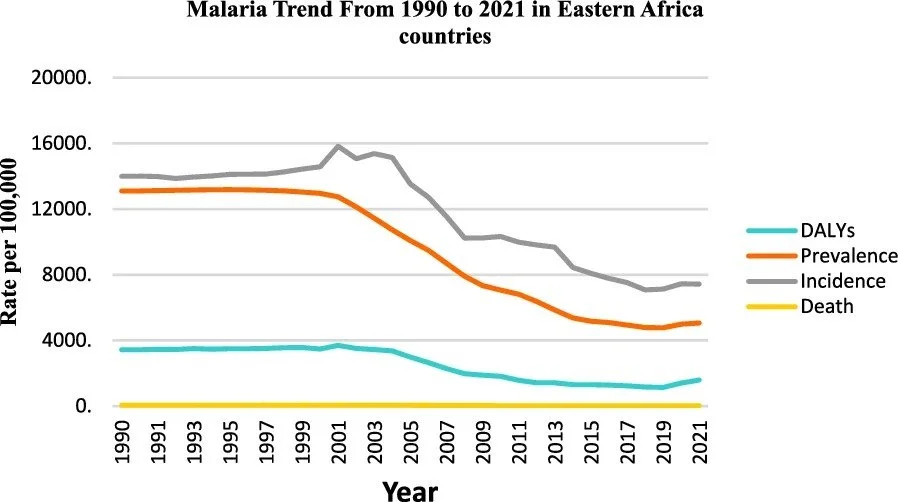
Results. Malaria incidence, mortality, prevalence and DALYs declined significantly in the Eastern Africa region from 1990 to 2021. The rate of incidence, prevalence, mortality and DALYs of malaria in Eastern Africa decreased by 54%, 61.8%, 62%, and 63.8%, respectively. However, the malaria burden remained highest among children under five, with DALYs peaking in neonates aged 7–27 days. In 2021, South Sudan had the highest age-standardized incidence and prevalence rate, whereas Uganda recorded the highest malaria mortality and DALY rate. The Comoros showed a significant decline in malaria burden, whereas Ethiopia experienced an increase in all metrics from 1990 to 2021. Child underweight and stunting were the major risk factors for malaria-related DALYs and deaths in 2021.
Conclusions. Despite overall progress, malaria remains a major health threat in Eastern African nations, with the three leading countries in the region being South Sudan, Ethiopia and Uganda. The highest disease burden persists among neonates aged 7–27 days, underscoring the urgent need for targeted interventions.