The future of epidemic monitoring is all around us: EpiGen collaborates with ODIN to advance environmental genomics
A personal view article published in the Lancet Microbe highlights the transformative potential of environmental surveillance in sub-Saharan Africa
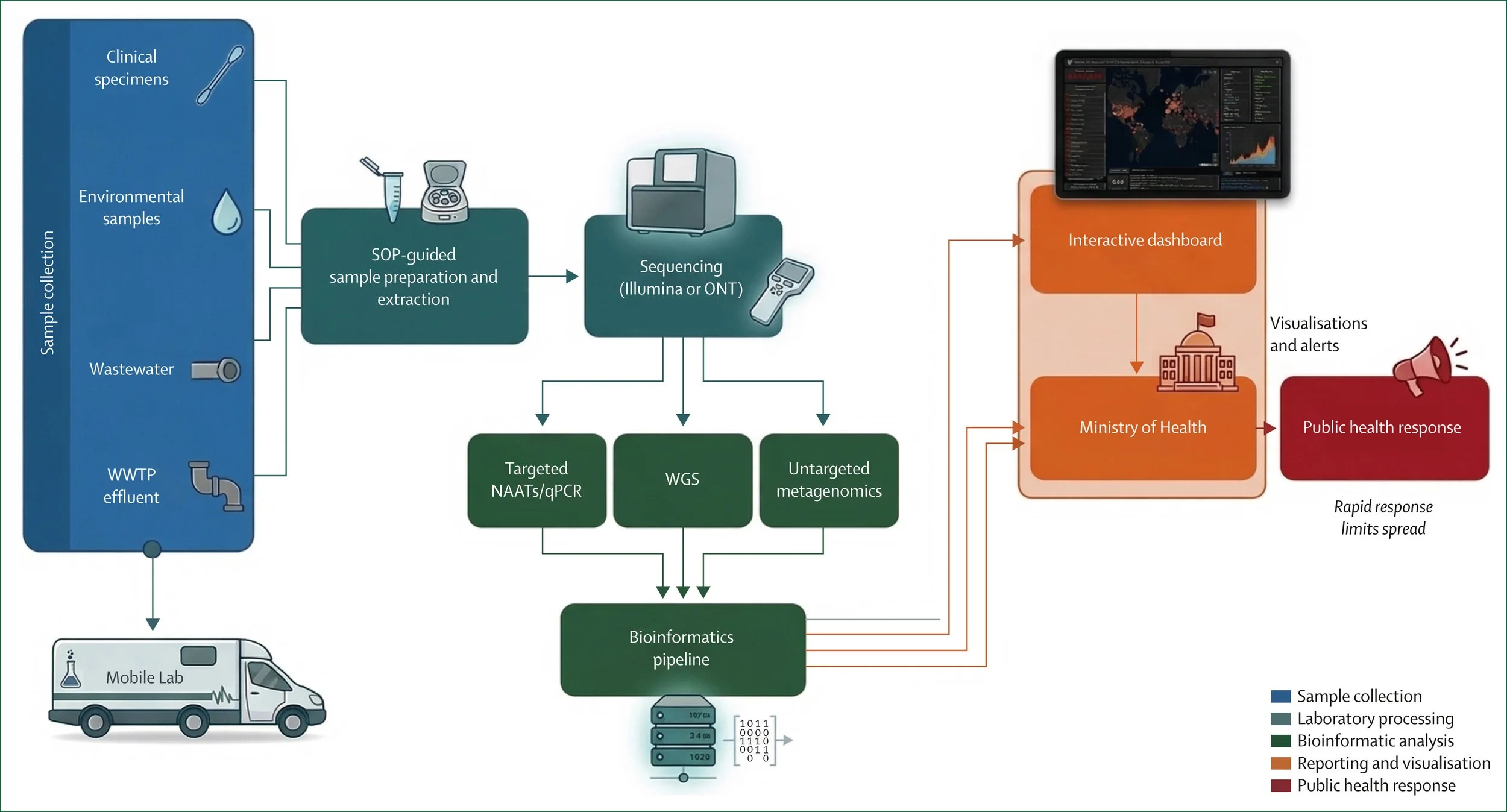
Traditional surveillance often misses asymptomatic cases or suffers from under-reporting in regions with limited healthcare access. The ODIN Wastewater Surveillance Project – working under our GenEpi Network umbrella – demonstrates how sequencing all genetic material in an environmental sample can detect a wide spectrum of pathogens. Such untargeted metagenomics identifies anything from antimicrobial resistance (AMR) genes to emerging viruses, without relying on individual clinical tests.
This article features contributions from EpiGen’s international principal investigators, Dr. Dawit Wolday and Prof. Tobias Rinke de Wit, and their PhD student, Muhammed Rameto.
Beyond the technical innovation of mobile laboratories, this work carries significant policy implications. The focus of data collection is shifted, as data are collected from multiple sources, including clinical specimens, wastewater, wastewater treatment plant effluent, and environmental samples.
Through projects like ODIN and collaborations like ours, African nations are empowered to build robust surveillance systems that are not tied to individual human health records. This approach follows both FAIR data principles (Findable, Accessible, Interoperable, and Reusable) and provides a strategic pathway for African countries to maintain data sovereignty and ownership over their national health security landscape.